

ABOUT
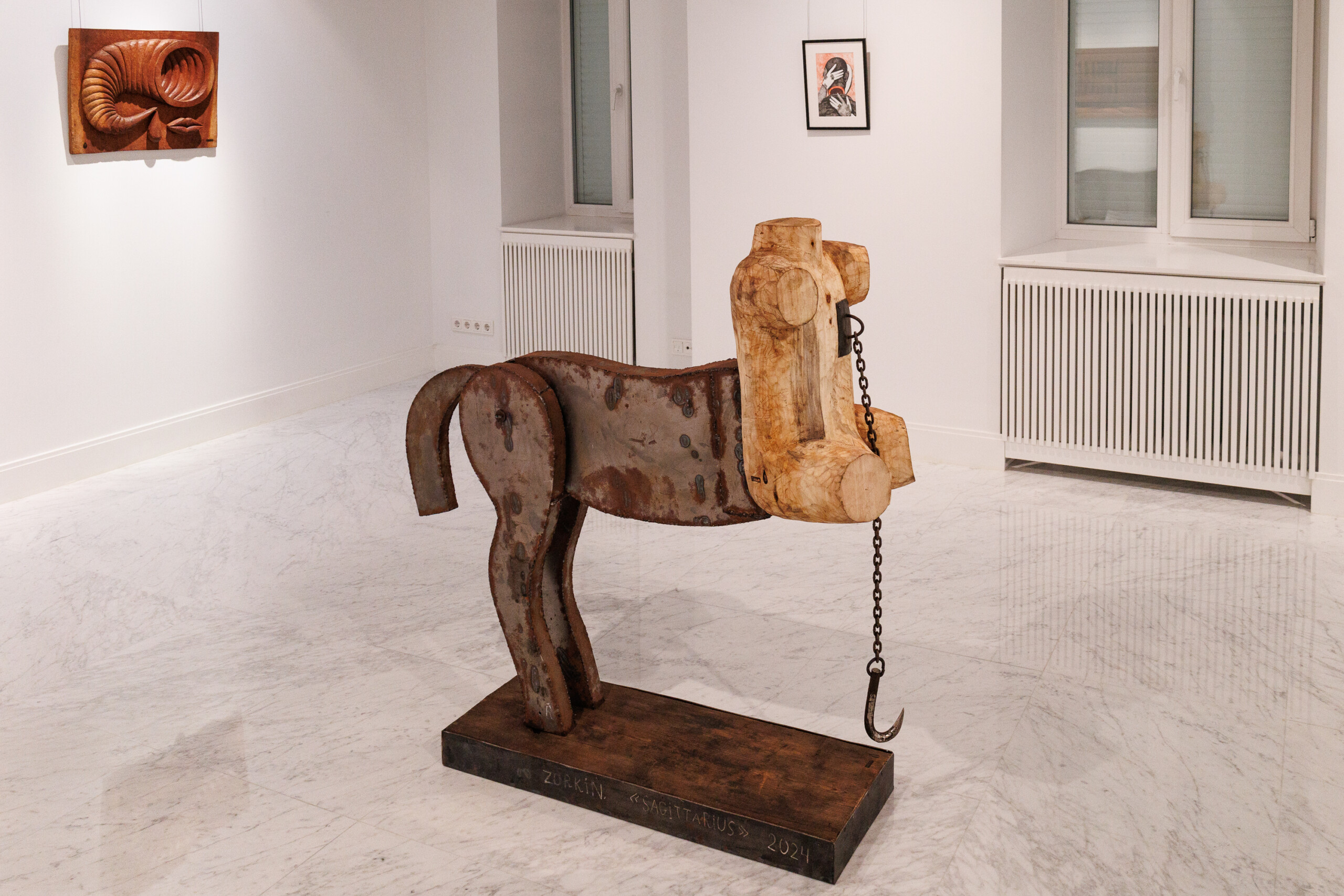
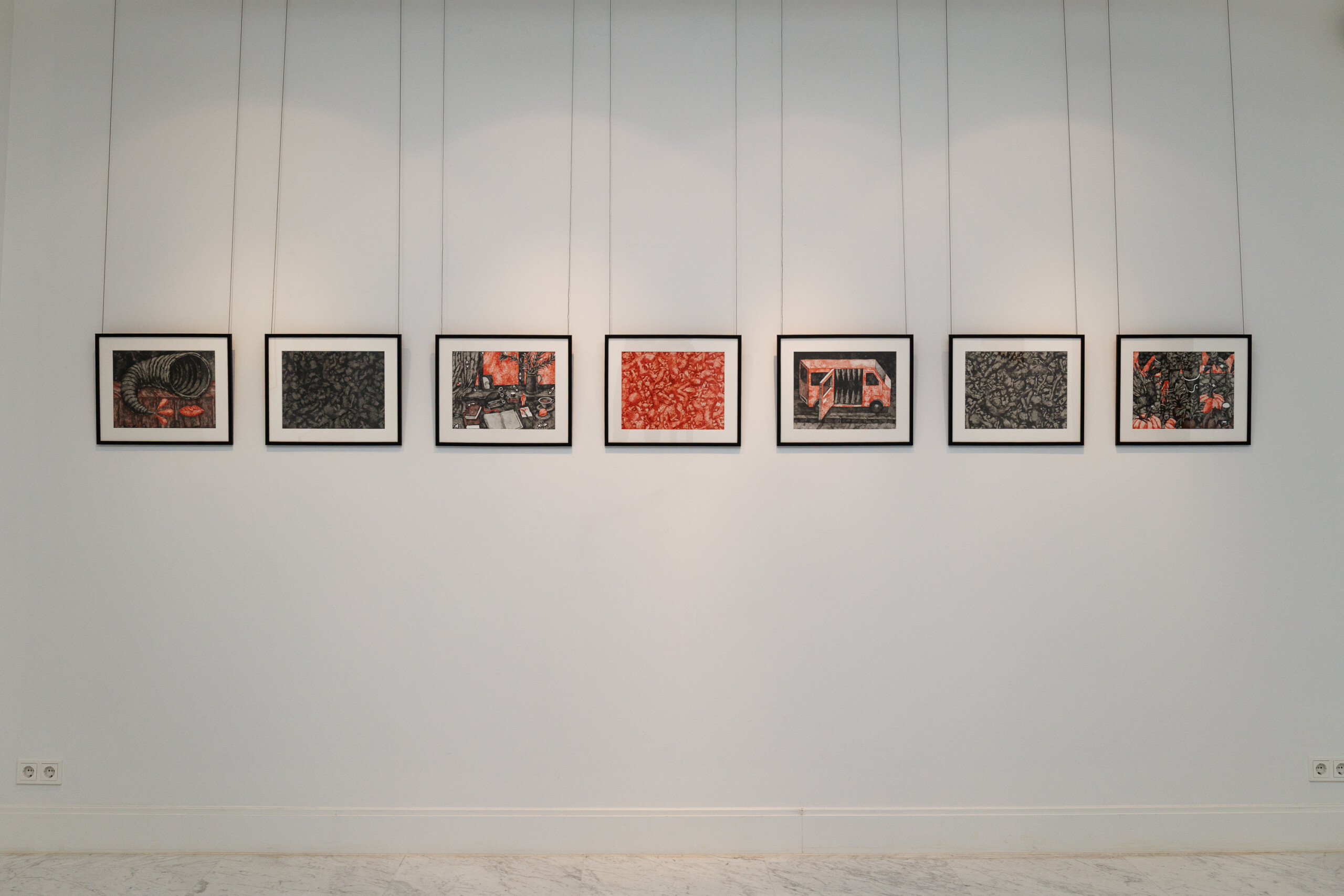
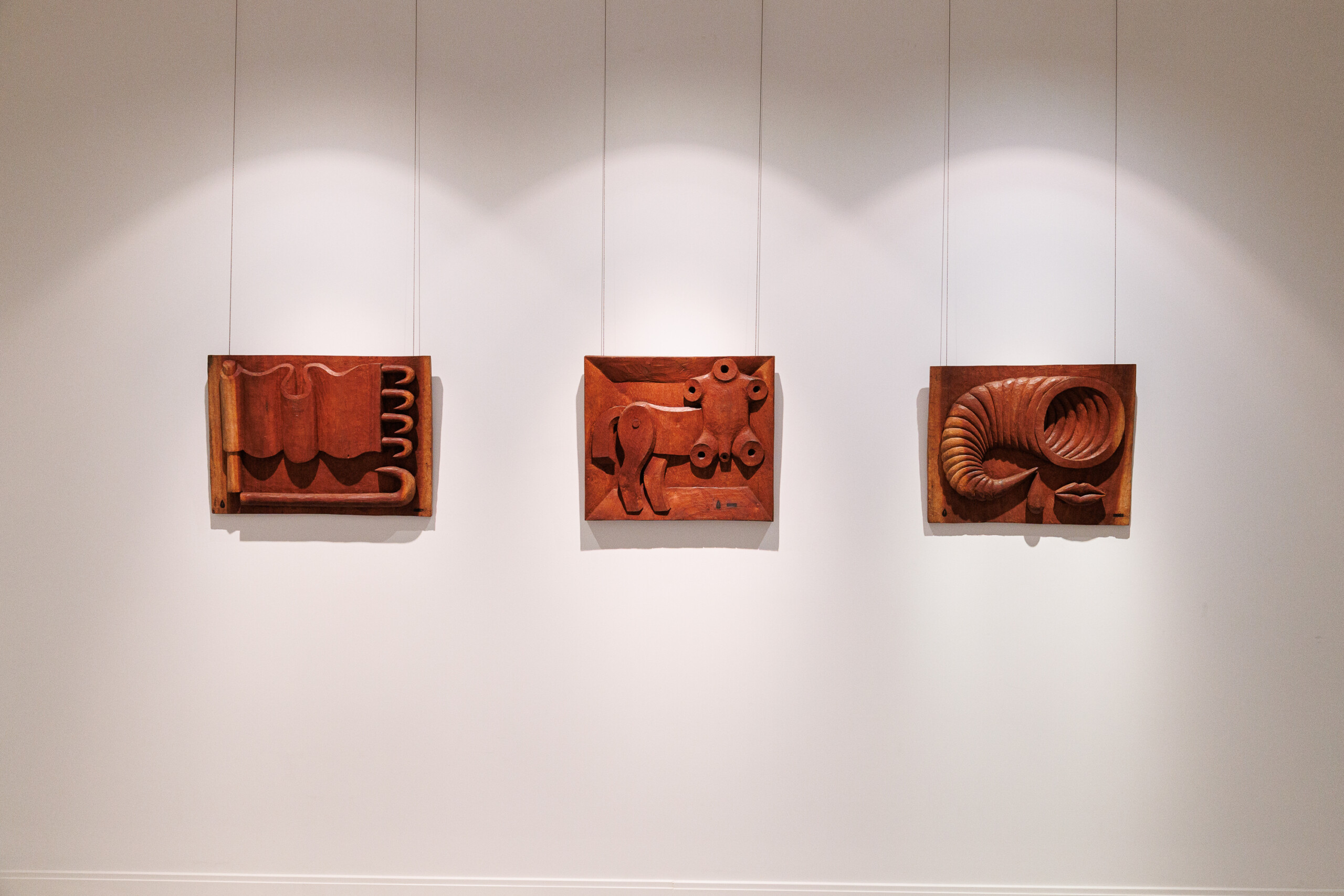
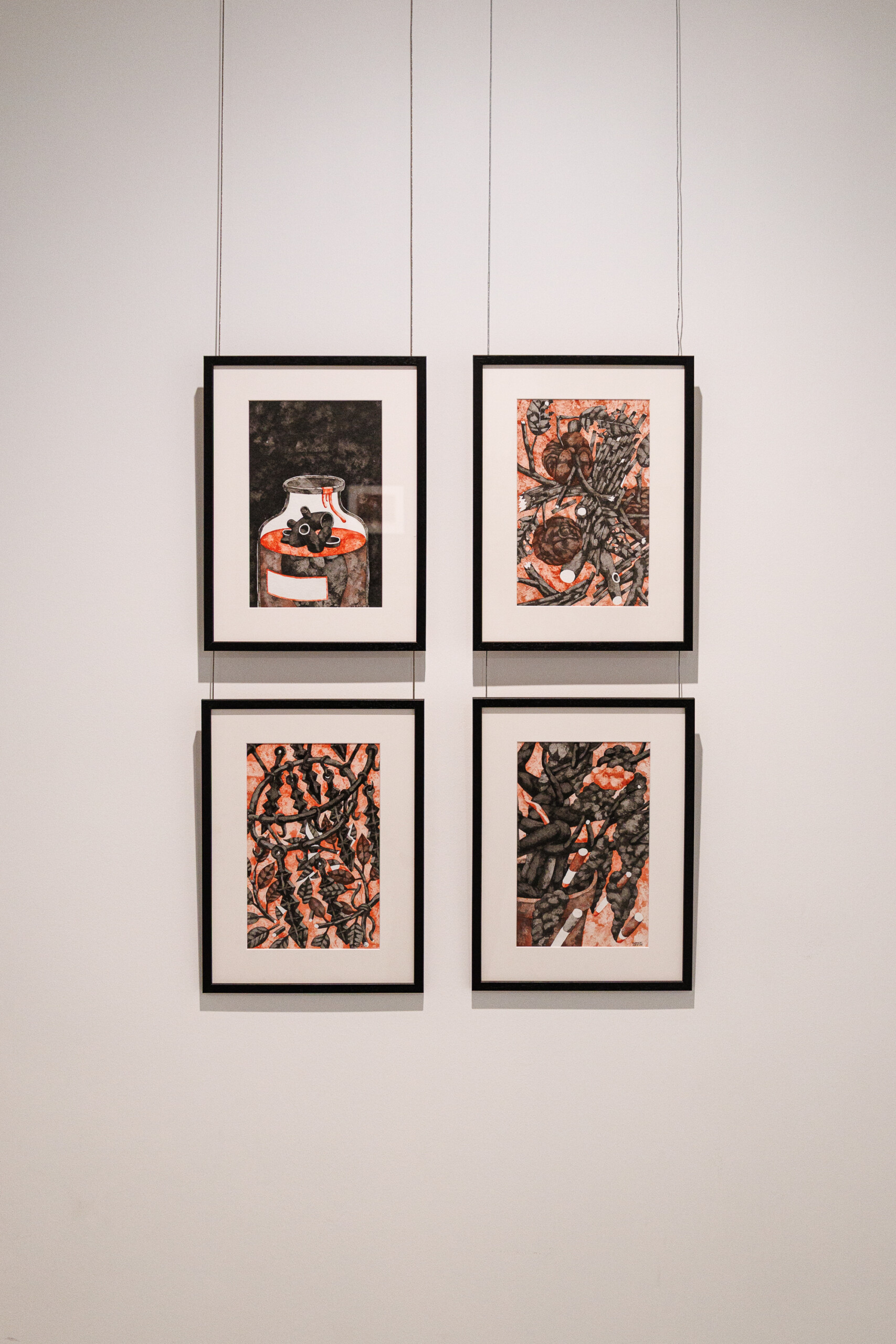
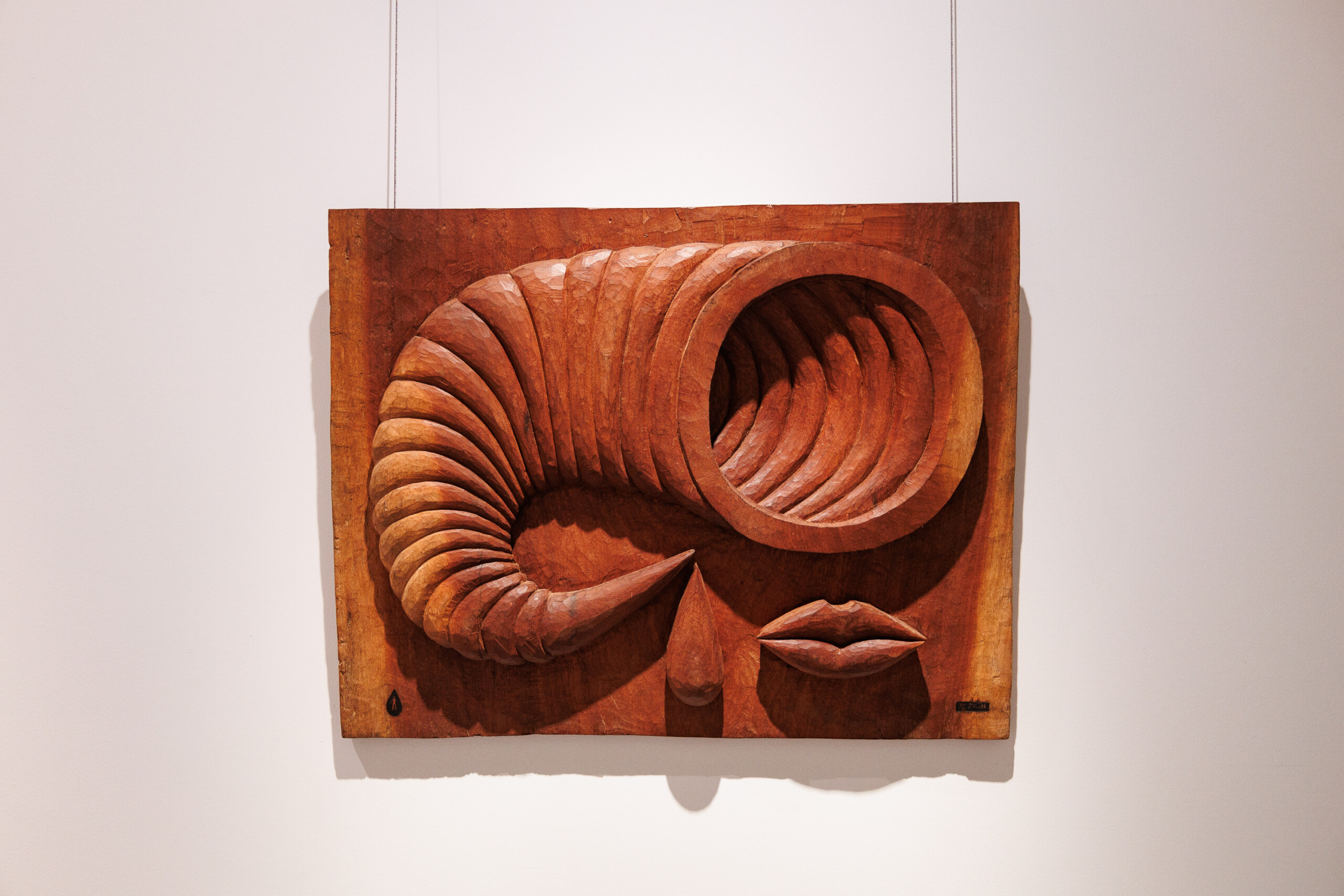
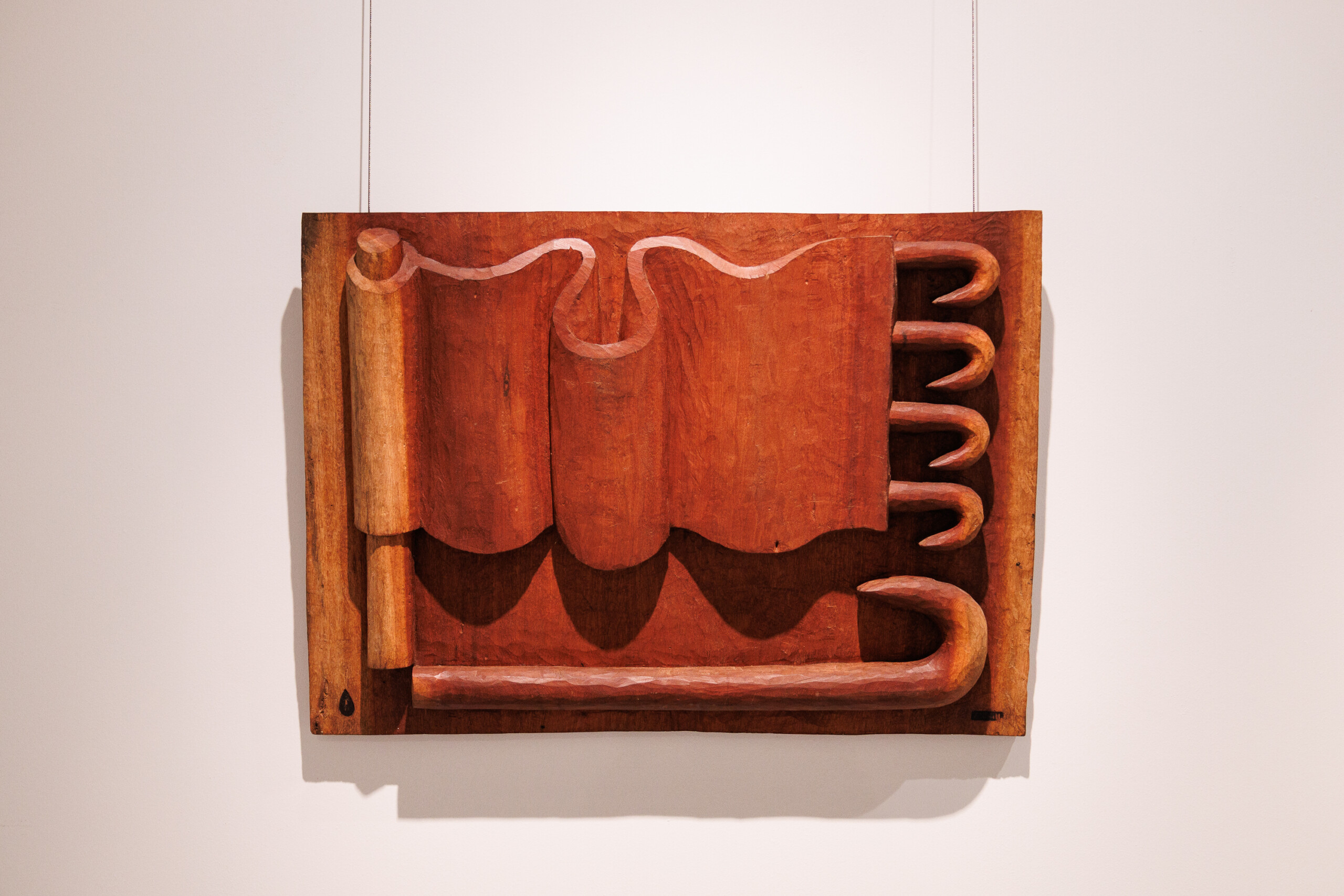
Under the collective title “Cardiomachia,” three groups of works by Kostiantyn Zorkin, all created in 2024, are brought together. The first group consists of illustrations for the book Bloody Compote by Czech writer Adéla Knapová, written in Kharkiv during the full-scale invasion. In the second group, these images acquire a new material form — in redwood reliefs, where the graphic line transforms into three-dimensional shape. The third group features the sculpture “The Archer,” which continues the artistic logic of the objects Zorkin created for the theatrical production Medea. Together, these three parts build a coherent narrative about the search for a new language to describe love — and the struggle to preserve it.
The title “Cardiomachia” (Greek καρδιομαχία) is a deliberately invented word. The combination of kardia (“heart”) and machia (“battle”) introduces a field of ancient meanings that bind all the works of this period. Zorkin employs this neologism to name the paradigm that concerns him: a form of love that confronts death and strives to overcome it.
His turn to antiquity is neither stylization nor decorative citation. Rather, it is a way of speaking about the present — about the reality in which we live. For Zorkin, antiquity embodies both heroic pathos and a deep sense of tragedy. In the context of war, broken museum statues take on new resonance: they evoke amputated bodies, shattered towers, cities that have lost their outlines under missile strikes. The ruins of ancient temples echo the Ukrainian streets that have lost entire quarters.
Within this perspective, love and death appear not as abstract concepts but as forces in constant interaction. Death encroaches upon everything created by love, yet love, in turn, seeks to preserve, restore, and reclaim. Zorkin carries this tension into his own experience — a story of great love unfolding amid a great war. Here, the heart becomes a double symbol: at once the source of tenderness and a force of danger, capable of destroying what has already lost its vitality.
Before the face of death, a powerful force awakens — a dragon of love that offers no choice and asks for no permission.
In this sense, Cardiomachia is more than a title. It is a way of describing an inner struggle in which the heart must not only withstand the blow but decide what deserves to be preserved — and what must be relinquished.
Cardiomachia is a Battle with the Heart, in which the heart must prevail.
SELECTED GALLERY